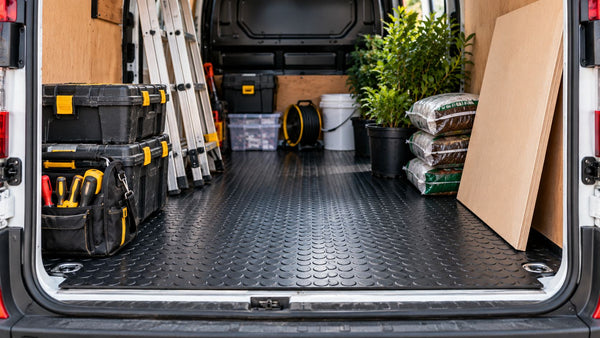
For many working vans, a suitable rubber flooring covering is the better everyday surface. It gives you a separate layer for daily loading, foot traffic and cleaning, while helping protect a sound floor beneath it. Plywood remains valuable when the van needs a rigid base. In many cases, the most practical choice is plywood underneath and a suitable covering on top.
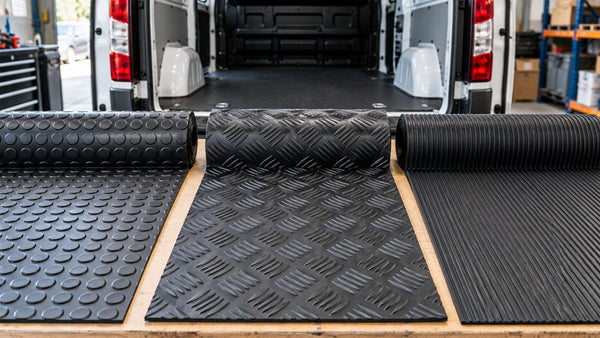
The deciding question is what your van already has. If the plywood is sound, you may be able to protect it rather than replace it. If the base is damaged, fitting a covering over it will not solve the underlying problem. Tuda’s rubber flooring range offers several patterns, with products described as rubber and rubber/PVC, so compare individual listings before choosing one.
|
Option |
Best Reason to Consider It |
Main Limitation |
|
Exposed Plywood |
You need a rigid base, or an existing soundboard already meets your needs |
Its exposed surface takes the daily wear |
|
Suitable Flooring Covering |
You have an appropriate base and want a separate working surface |
It cannot repair a damaged or unsuitable base |
|
Plywood with a Suitable Covering |
You need both a rigid base and a protective top surface |
The layers require careful fitting and moisture checks |
Durability
Durability depends on the particular board or flooring product, the loads carried and how the floor is maintained. For a tradesperson who loads tool cases through the rear doors every day, the surface at the threshold may matter more than a broad claim about which material “lasts longer”.
Exposed plywood can serve as a working floor, but cases, grit and repeated loading act directly on the board. A suitable rubber covering takes that surface wear instead, making it a useful choice when the plywood underneath is sound, and you want to preserve its finish. Inspect the covering regularly too, particularly at thresholds, joins and areas where equipment is dragged.
If a top covering becomes worn, whether you can replace it without disturbing the base depends on how it was fitted. That is worth considering before installation. If the plywood is already soft, loose or damaged, assess and repair the base first. A new surface cannot make a failing board sound.
Grip and Load Stability

A textured covering may be preferable to an exposed, smooth floor for people moving through a working van, but its actual grip depends on the product and conditions. Water, mud, sawdust and loose debris can affect any walking surface.
Tuda’s non-slip checker rubber flooring is one patterned option to consider for a van floor. Inspect the product specification and, if grip is central to your decision, ask Tuda for the relevant performance information. The product name alone does not establish a tested slip rating for your installation.
Surface grip and load security are different issues. A covering may change how an item contacts the floor, but equipment must still be secured with appropriate restraints. Keep the van’s tie-down points accessible when planning either a plywood base or a covering.
Impact Protection
The effect of a dropped tool depends on its weight, the contact area and the floor beneath it. A rigid plywood base and a top covering contribute different things, which is why using both can be more useful than treating them as competing finishes.
Imagine a heavy toolbox landing in the same spot repeatedly. On exposed plywood, contact is directly with the board. With a suitable covering over sound plywood, the covering becomes the contact surface, although the force can still reach the base beneath it. The covering should not be treated as proof that the vehicle floor is protected against a particular impact.
Sharp equipment feet and heavy machinery need closer attention than occasional tool drops. If substantial loads or fixed equipment are involved, have the floor construction and fixings assessed for the vehicle. Choose a covering to protect a suitable base from everyday use, not to compensate for one that cannot support the intended setup.
Water Resistance
Neither plywood nor a covering makes an installed van floor automatically waterproof. Joins, cut edges, thresholds and openings around fixtures can all affect where water travels.
This matters when wet equipment is loaded after outdoor work. An exposed plywood floor makes a spill easier to see, but water may reach vulnerable cut edges if they are not appropriately finished. A suitable covering can provide a surface that you can clean after a wet load, but moisture may still get beneath it at an edge or join. If that happens, inspect and dry the affected area.
Before fitting a covering, check that the existing floor is dry and sound. Plan how you will notice and investigate leaks or trapped moisture later. The properties of the selected product, the plywood grade and the fitting method all matter more than a general claim that “rubber resists water” or “plywood absorbs it”.
Cleaning and Maintenance
For a busy work van, ease of cleaning is a strong reason to consider a suitable floor covering. The exact routine depends on the surface pattern, the chosen product and the substances brought into the van.
After a week of carrying muddy tools and sawdust, remove loose grit first. On exposed plywood, look for worn finish, spills and damage at cut edges as you clean. With a covering, pay attention to dirt around raised details and joins. Tuda’s coin rubber flooring is worth assessing for both its appearance and how its pattern would fit your cleaning routine. Check the selected variant and ask which cleaning products and methods Tuda recommends.
A covering over plywood also needs an occasional check beneath or around accessible edges, especially after a spill. Do not assume that either material tolerates oils, solvents or strong cleaners without checking the relevant care instructions.
Noise Reduction
A floor covering may change a particular noise where a case contacts the floor, but it will not soundproof a van. The result depends on the whole floor installation and on what is moving inside the vehicle.
If tool cases rattle against exposed plywood, consider whether a suitable covering would address that contact. First check that the cases are restrained and that the noise is not coming from loose tools, racking or a floor panel. A covering cannot fix an insecure base or equipment that moves during travel.
Choose flooring for the surface and protection it provides in daily use. Treat any improvement in noise as dependent on the complete setup unless the product has relevant acoustic test evidence.
Installation
Both plywood and flooring coverings need careful measuring, cutting and fitting. If your van already has a sound, suitable base, fitting a covering may avoid replacing that base, but the condition of the substrate must be checked first.
Measure the longest and widest parts of the area, then record where wheel arches, steps, door openings, racking and tie-down points interrupt the shape. A cardboard or paper template can help with an irregular outline. Plan the direction of the material, any joins and how the edges will finish before cutting.
If you need new plywood, confirm the appropriate board and fixing method for your vehicle and intended use. If you are fitting a covering, follow the selected product’s instructions for substrate preparation and installation. Do not assume that the same adhesive or fitting method suits every product or existing floor.
Roll width can affect where joins fall. Tuda’s 2 metre wide checker flooring is listed as a rubber/PVC product, so check its selected variant against your floor measurements and planned layout. A wider roll may help with some floors, but it does not guarantee a one-piece fit around every obstacle.
If you find damage, persistent dampness or uncertain fixing points, get those assessed before installing another layer.
Weight and Thickness
Compare the actual weight and thickness of the products you intend to fit. This is especially important if you plan to add a covering to existing plywood: the finished floor will include both layers.
Check door clearance, the height at the rear threshold, changes in level at joins and continued access to fixtures and tie-down points. Added flooring weight also forms part of the van’s payload calculation. The relevant figures depend on the selected product, the area covered and any base you retain or install.
Plywood comes in different specifications, as do Tuda’s coverings. Measure your own van and check product data rather than comparing one particular roll with “plywood” as though every board were the same.
Cost and Long-Term Value
For a van with sound plywood, adding a suitable covering may be a more focused purchase than replacing a base that still does its job. For a van without a suitable base, the full cost may include both plywood and a top surface.
Compare more than the initial material price. Allow for preparation, fitting materials, cutting waste, edge finishing and any professional labour. Consider what would need to be removed if the surface wears or if the base later requires inspection.
Start with the condition of the existing floor. If it is sound and your main concern is daily wear or cleaning, compare suitable coverings. If the base is damaged, price the necessary repair or replacement before choosing a finish. This avoids spending money on a surface that has to be lifted again to deal with the problem underneath.
Which Is Best for a Van Floor?
For a van with a sound base that sees regular use, a suitable rubber flooring covering is often the more useful choice for the exposed surface. Plywood remains the option to assess when a rigid base is needed. Using both can give a working van a base and a separate surface for daily loading.
|
If Your Van… |
Consider… |
Check Before Proceeding |
|
Has sound plywood and carries tools or equipment daily |
A suitable covering, like rubber flooring, over the existing base |
Product suitability, cleaning, edges and access to tie-down points |
|
Needs a new rigid base |
Suitable plywood, with a covering if the exposed surface also needs protection |
Board specification, fixings, combined thickness and payload |
|
Has sound plywood and sees light use |
Keeping it exposed if it already meets your needs |
Wear, finish and whether a covering would solve a real problem |
|
Has damaged or damp flooring |
Assessing and repairing the underlying floor first |
The cause of the damage and the vehicle floor beneath it |
The strongest case for rubber flooring is therefore a practical one: when the base is already suitable, a covering lets you choose a working surface for the wear and cleaning your van faces. Measure the floor, inspect what is underneath and compare Tuda’s individual product specifications before selecting a pattern and roll width.